

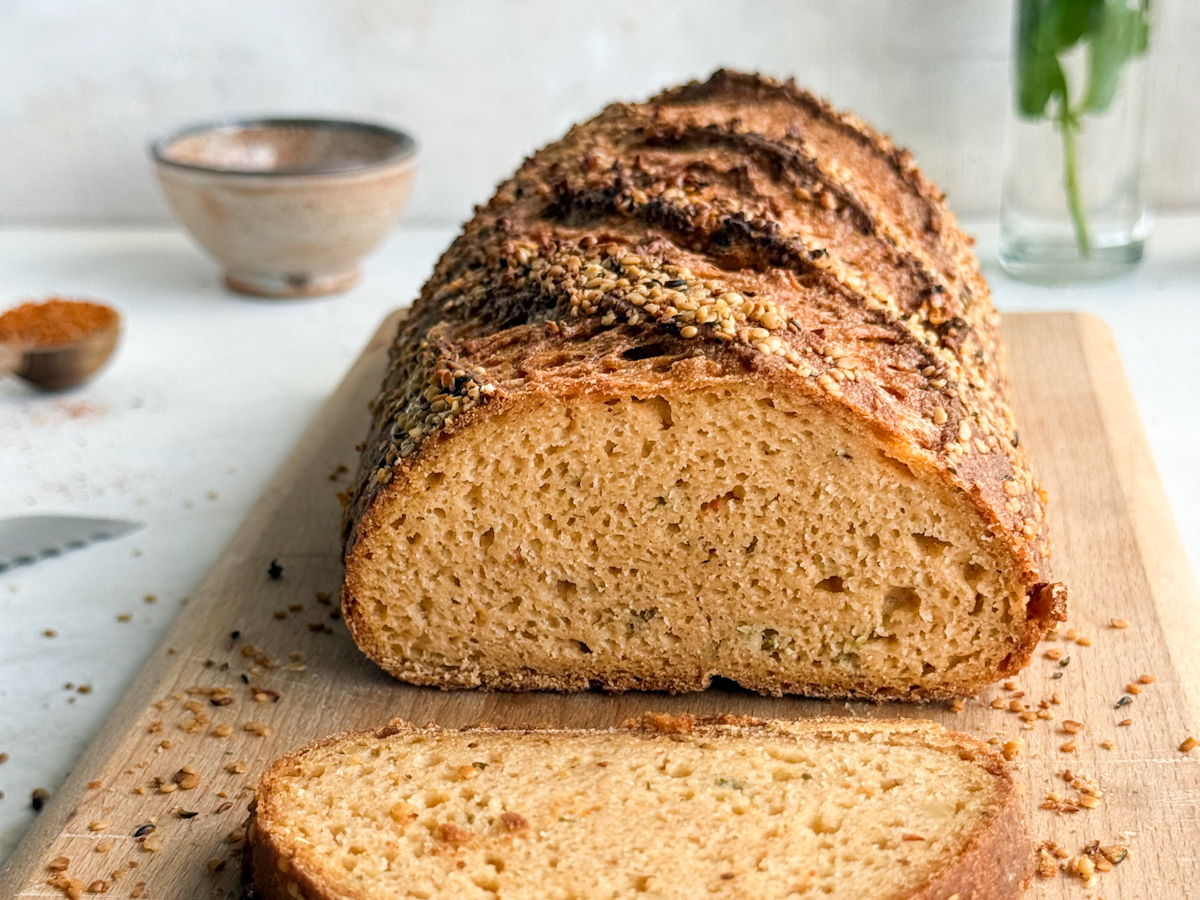
Make a gluten free sourdough baguette with tomato paste and basil pesto. This simple gluten free recipe is one that everyone will love. The starter adds a gentle tang and lift along with the tomato and basil for this flavourful baguette.
If you prefer to make this bread the same day then add some baking powder to the dough. Otherwise use active starter and ferment the dough overnight in the fridge before baking the next day.
I made this baguette with tomato paste because that’s what I had in my fridge along with the pesto. When my family came over for dinner they completely demolished it. So that was a good sign … and most of them are not celiac like myself.
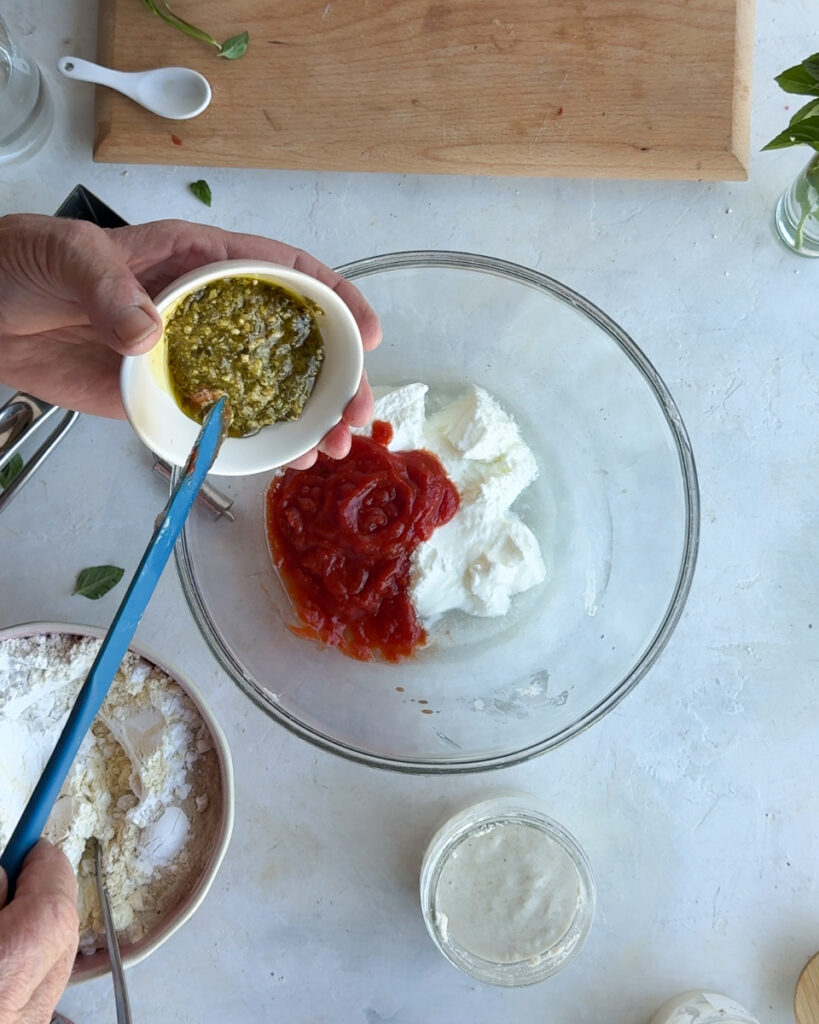
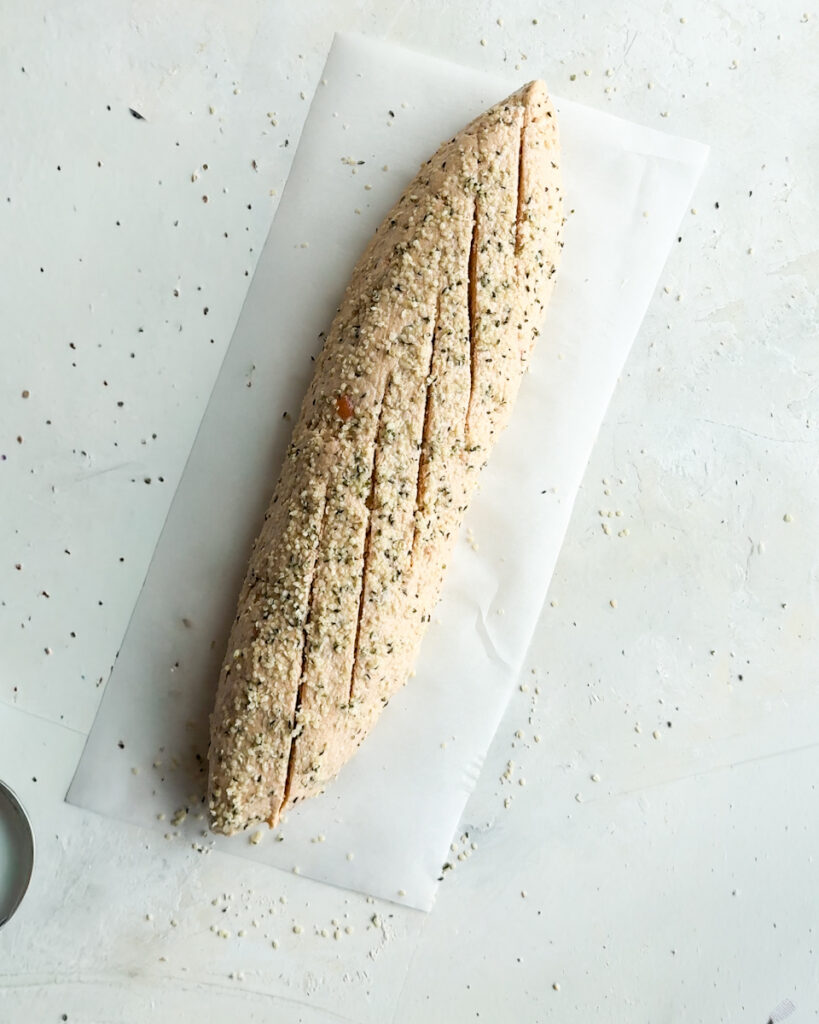
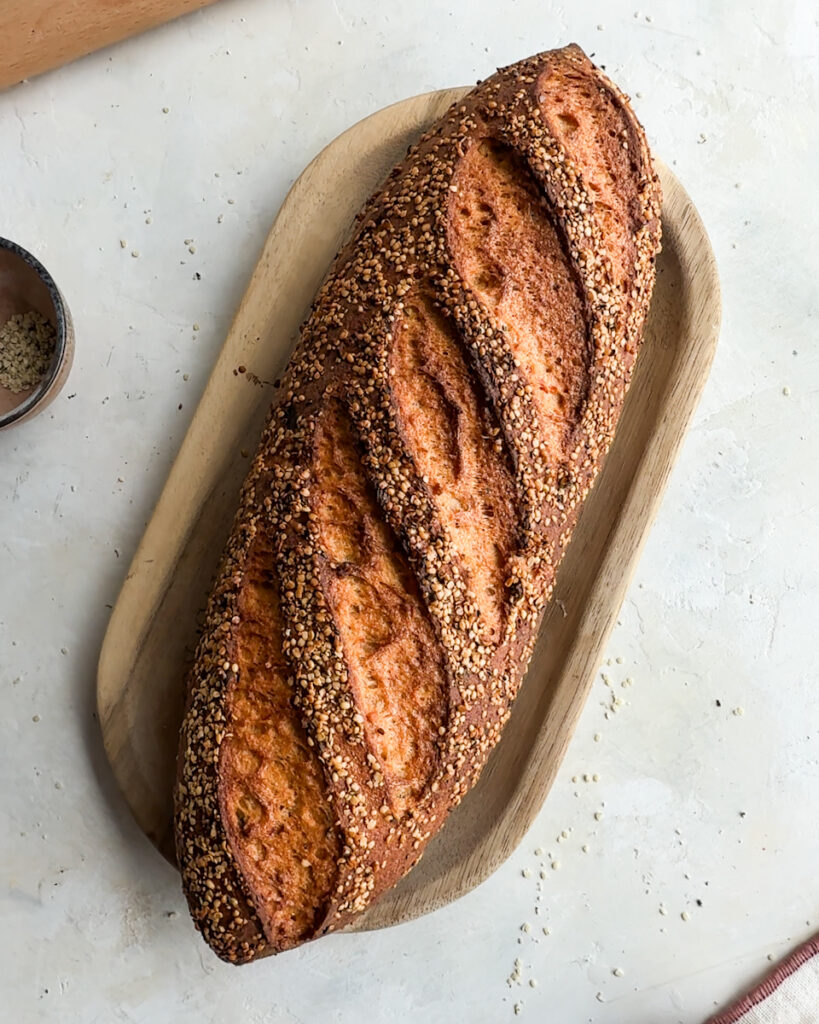
WHAT GOES INTO THIS SOURDOUGH BAGUETTE
Understanding The Flour Blend
Sorghum and Millet flour – for a wholegrain base and a mild nutty flavour with protein and structure
Tapioca Starch – for lightness and chew that helps with the stretchy quality that GF bread lacks.
Potato Starch – for moisture retention a nd to keep the crumb soft, rather than dry and crumbly.
Psyillium Husk Powder – the gluten replacement that binds everything and gives the dough elasticity.
The Flavour Builders
Gluten Free Sourdough Starter – tanginess, depth and natural leavening over time
Tomato Paste – tasty umami base
Basil Pesto – herby richness that adds flavour, a little oil and texture
Choose Your Method Before You Start
This recipe works two ways.
If you want to bake today – use sourdough discard that’s 1 to 2 days old, and add baking powder. The discard adds flavour, but the baking powder helps with the lifting.
If you have time to plan ahead – use an active bubbly starter, but omit the baking powder. Give the dough 8–12 hours in the fridge before shaping and baking. The long ferment version has noticeably more depth and flavour and is worth the wait … when you have the time.
Before You Begin
This dough behaves differently to anything you might be used to if you’re coming from conventional bread baking. Don’t be alarmed when it feels stickier than expected because that’s the psyllium husk doing its job. Give the dough its full 20-minute rest before you judge the consistency, as the flours and psyllium need time to absorb the liquid. If you’re going the long ferment way it’s worth the wait for the fermentation flavours to develop. Slow fermentation is where the real magic happens.
How to Make It
Start by sifting or whisking your dry ingredients together in a large bowl to fully combine the psyllium husk powder. In a separate bowl add your active sourdough starter, yoghurt, water, tomato paste, basil pesto, fresh basil, and salt. Mix with a spoon or your hands until a soft, slightly tacky dough forms, then cover the bowl and allow it to rest for 20 minutes.
If you’re doing a long ferment, place the unshaped dough into a covered dish and leave it at room temperature for about an hour. Then refrigerate the dough for 8–12 hours. The next day remove the dough from the fridge, let it come to room temperature for about 30 minutes, shape it into a baguette and let it rest for another hour or two, depending upon the temperature.
When the dough has risen enough to bake, preheat your oven to 425°F. Whisk together the yoghurt and olive oil topping and brush it generously over the surface, then scatter your hemp seeds, or other favourite seeds on top. Bake for 35–40 minutes until deep golden brown and hollow sounding when tapped underneath. Rest for at least 20 minutes before slicing and serve with a generous amount of butter or a drizzle of olive oil.
Tips & Troubleshooting
Your dough feels too wet or too dry. This is the most common issue with gluten-free baking and it comes down to the fact that GF flours vary enormously between brands in how much liquid they absorb. You may need to add a little more flour or to start with less water and gradually add the full amount if it is needed.
Your psyllium husk matters more than you think. Fine psyllium husk powder behaves very differently to coarser varieties. You may need to test a recipe a couple pf times depending upon the psyllium you are using. Try reducing it by 1 or 2g if the dough is too stiff or adding a little more if the dough falls flat and does not shape well.
For the long ferment make sure your starter is active and bubbly before you begin, because a sluggish starter won’t do much in a cold fridge.
It didn’t rise much. Gluten-free sourdough will never rise like a wheat loaf. A modest puff and a good oven spring is a win. What you’re looking for is a loaf that holds its shape, has a crisp crust, and sounds hollow when tapped.
For many other sourdough recipes and tips, check out my “Gluten Free Sourdough Baking” Cookbook.
Key Takeaways
- This tomato pesto sourdough baguette uses a mix of gluten-free flours and psyllium husk for texture and flavour.
- You can choose to bake the baguette the same day with baking powder or ferment it overnight for deeper flavour.
- Sorghum and millet flour, along with tapioca and potato starch, create a light and chewy baguette.
- Make sure to let the dough rest for 20 minutes to absorb moisture before judging its consistency.
- For best results, an active starter and a long fermentation improve the baguette’s flavor and texture.
Tomato Pesto Sourdough Baguette
Ingredients
- 100 g plain yoghurt or dairy-free
- 70 g tomato paste
- 30 g basil pesto
- 20 g fresh basil leaves chopped
- 100 g active sourdough starter (for long fermentation) or use discard 1-2 days old and add 1 tsp baking powder to bake the same day
- 180 g warm water
- 75 g sorghum flour
- 135 g millet flour
- 80 g tapioca starch
- 60 g potato starch
- 12 g psyllium husk powder
- 1 tsp salt
Topping
- 10 g yoghurt
- 5 g olive oil
- 8 g hemp seeds
Instructions
- To a large bowl add yoghurt, tomato paste, basil pesto, fresh basil leaves, starter and water.
- Add sorghum flour, millet flour, tapioca starch, potato starch, psyllium husk powder, and salt to a bowl. Sift or whisk well.
- Add the dry ingredients into the wet ingredients. Mix with a spoon or your hands until a soft, slightly sticky dough forms.
- For the long ferment – Shape the dough into a ball, place it into a bowl and cover. Allow to rest for at least 20 minutes. This gives the psyllium husk time to fully absorb and the starter to wake up a little. Let the dough sit on the counter at room temperature for about 1 hour … depending upon the temperature. Place into the fridge overnight.The next day remove the dough from the fridge, let it come to room temperature for about 30 minutes, shape it into a baguette and let it rise before baking.
- For the same day bake – Mix and rest the dough 20 to 30 minutes for the dough to hydrate. Shape the loaf into a baguette, apply the topping and bake within 15 minutes.
- Preheat your oven to 425°F and whisk together the yoghurt and olive oil topping. Brush the topping generously over the surface, then scatter your hemp seeds, or other favourite seeds on top. Score 5 even lines.
- Bake for 35–40 minutes until deep golden brown and hollow sounding when tapped underneath. Rest for at least 20 minutes before slicing and serve with a generous amount of butter or a drizzle of olive oil.
- Store covered at room temperature for 2-3 days and then slice and freeze the remainder.
Be the first to comment